Food
Evaluating the social and economic impacts arising from investments in wheat science, research and innovation.
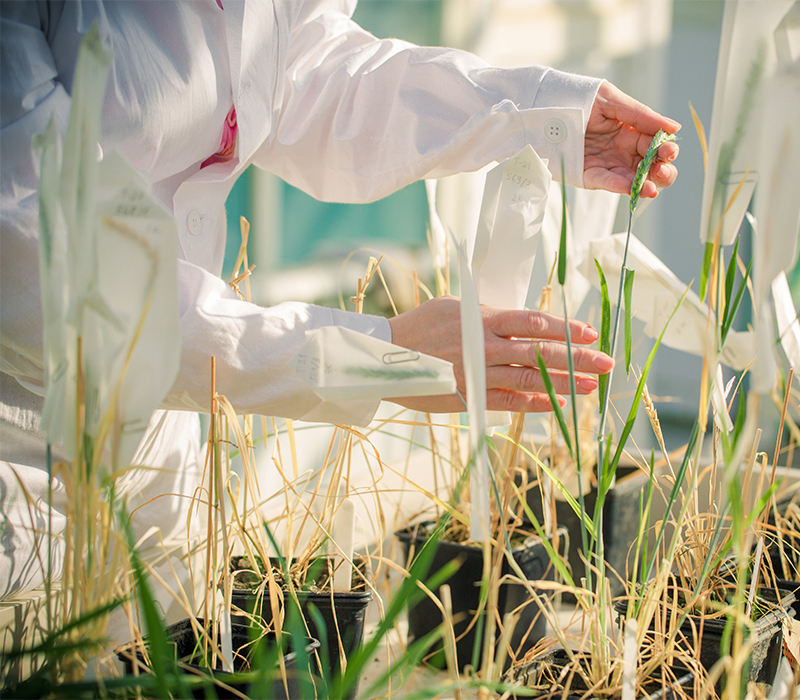
Wheat is critical to global food security and an essential component of the human diet. Due to increasing population size and average incomes, the global demand for wheat is growing by 1.7% each year. The current production of wheat is not sufficient to meet the future needs and it is projected that the average yields will need to increase 40% in the next 30 years to match these future demands. Additionally, wheat is susceptible to climate change and changing global temperatures, affecting its ability to grow in the Global South, with yields in this area expected to decline 10-15%.
UKRI/BBSRC have invested £221.7 million in the last ten years to wheat research and innovation with the goal of increasing wheat production and improving wheat resilience to climate change.
WECD was commissioned by UKRI/BBSRC to assess the current and potential social and economic impacts from these investments and return on investment (RoI) for the UK and globally from the public investment . The evaluation explored the extent to which this research and investments has contributed to social and economic impacts generated through: a) the development and improvement of UK wheat varieties with beneficial traits (e.g., increased yield, increased resilience, improved sustainability); b) research in transformational technologies such as automation, sensing, farmer decision support, and precision agriculture; and c) international collaboration and partnerships between researchers and relevant stakeholders including the Wheat Initiative and the International Wheat Yield Partnership (IWYP); and d) successful translation into practical and commercial applications.
Primary and secondary research, qualitative and quantitative techniques (including bespoke economic modelling to assess impacts on health and the environment) were deployed.
See: https://www.ukri.org/publications/evaluating-the-impacts-of-bbsrcs-investment-in-wheat-research/
UKRI/BBSRC also commissioned WECD to undertake an independent process evaluation of the UK’s Global Food Security (GFS) programme. The programme was launched in 2016 and brought together the UK’s major public sector funders of sustainable, healthy and resilient food systems research in order to help tackle global food security-related challenges. at. GFS partners include UKRI agencies, government departments, devolved administrations, and other organisations (e.g. Met Office, Wellcome Trust).
The main objective of the evaluation was to assess the extent to which the GFS programme delivered its vision and the associated set of added values, enabled by the programme’s operating principles and overarching principles of governance. To address this objective, our research combined desk-based reviews of programme information, relevant policy documents and comparator programmes, with primary research including around 70 interviews with the programme’s main partners and organisations involved in the governance of the programme and its activities, and an online survey with research and commercial organisations involved in the activities of the programme but also interested in future public policy in this area – all delivered within three months from commission.
Our work contributed to affirm a ‘food systems thinking’ approach in academia and in policy-making, and has supported inter-disciplinary research through the Resilience of the UK Food System in a Global Context and Transforming UK Food Systems (Strategic Priorities Fund) programmes.