Economic development and growth
Devolution
Mayoral Combined Authorities (MCAs) are legal bodies, established using national legislation, that enable a group of two or more councils to collaborate and take collective decisions across council boundaries. As part of the devolution agenda pursued by successive governments over the past decade, a series of devolution deals have been brokered between national Government and MCAs which have, to varying degrees, granted these newly-established bodies power over a range of policy areas, including: adult skills, transport, planning, housing and health.
WECD was commissioned by MHCLG to assess six of these devolved administrations and establish how devolution has enhanced governance, with a particular focus on accountability, civic participation, transparency and scrutiny. The research included early devolved authorities that are Combined Authorities (CAs) with a directly elected Mayor (i.e. a Metro-Mayor):
- Cambridgeshire and Peterborough
- Greater Manchester
- Liverpool City Region
- Tees Valley
- West Midlands
- West of England
The study also included Cornwall Council as an example of rural devolution at that point, and London (the Greater London Authority, the London Assembly and the London Mayor’s Office) as an example of mature devolved city region mayoral governance.
The review included:
- A thorough desk-based review of the internal governance structures of each MCA, covering the historical development of their devolution deals and the range and depth of powers that they currently hold.
- An academic review of the devolution agenda, which identifies both best practice and the intended benefits, and places the English case in the correct international context (conducted by
- Extensive consultations with internal and external stakeholders covering areas relating to the structure and governance of each MCA, how these have emerged and continued to develop, as well as the impact the authority has had within its region, priorities and challenges for the future.
- A survey of MCA residents assessing their knowledge of the authorities’ existence, structure, powers and impact.
- Production of logic models for MCAs and the devolution agenda as a whole, designed to outline the intended function of each authority and the interface with the reality of governance.
- A review of international approaches with regards to Mayoral functions and leadership (Japan, USA, France and Italy).
A report was produced which included key survey results, research findings and recommendations, and has subsequently informed prospective government devolution policy. The report can be found here.
Warwick DC Investment Plan
WECD was commissioned by Warwick DC to gather evidence (quantitative and qualitative) to inform the distribution allocated to the District by the UK Shared Prosperity Fund. Our collated and analysed detailed information on a range of indicators to map the local area and support the Council and its partners’ vision and their investment plan.
- Businesses and entrepreneurship
- Connectivity and access infrastructure – including community facilities, digital and broadband, spaces, transport, energy/low carbon initiatives, culture and sports
- Community safety
- Community engagement in local decision-making and opportunities for networking
- Economy, industries, clusters, innovation
- Education
- Employment and inactivity
- Health
- Housing
- Incomes and cost of living
- Population groups and their needs
- Productivity
- Shopping/retail patterns
- Skills (composition, gaps, shortages)
- Visitors
- Workforce and commuting flows
WECD also identified current strengths and assets to build on and risks and challenges to be addressed and mitigated with the support of public funding. Drawing on discussions with local stakeholders, local MPs and local officers, WECD drafted the investment plan, prepared a list of projects and programmes, identified unit costs and proposed funding allocations, terms of governance and management, and monitoring and reporting (for MHCLG and internal accountability and performance management purposes).
A similar piece of work was delivered to North Warwickshire Borough Council.
Lancashire Growth Deal
The Lancashire Growth Deal (LGD) represented approximately £320 million public funding secured by the Lancashire Local Enterprise Partnership (LEP) and Lancashire Country Council from the Government’s Local Growth Fund. The funding aimed to support economic growth through a range of capital investments made across the whole of Lancashire between 2015 and 2023 around the following four themes:
- Releasing Growth Potential – by strengthening transport connectivity to create jobs and enable housing development.
- Supporting the renewal and growth of Blackpool – through a range of projects to boost the visitor economy and improve housing standards in the private rented sector.
- Growing the local skills and business base – through close working with education and training providers to ensure a co-ordinated and demand-led approach to skills provision.
- Innovation and manufacturing excellence – maximising the economic value of Lancashire’s centres of research and innovation excellence.
The WECD remit was to provide technical support to 53 projects funded by the fund with regards to monitoring and reporting progress and performance + an independent evaluation, from rationale to result and economic and wider impacts over the lifetime of the Growth Deal funding.
We developed and delivered an evaluation framework that was designed to operate at three levels: programme level, priority theme and project level (process, impact, VfM and Social Value). We also developed templates and tools for partners to collect monitoring data, with WECD collating and summarising this information, conducting additional fieldwork and reporting at different stages of the evaluation.
We worked closely with 14 local authorities and local HEIs and FECs. We also collaborated with other consultancies supporting the programme such Jacobs and Mott MacDonald.
The process we adopted followed a mixed methods qualitative and quantitative approach underpinned by sound project management, annual rounds of meetings and extensive consultations with a range of local and national stakeholders, monetisation of impacts, social value, RoI and VfM assessments.
Hampshire Skills Strategy and Action Plan
Local authorities have an incumbent duty to both secure appropriate education and training provision for all their young residents, and promote greater productivity and growth within their local economies. The production of well-informed growth and skills plans are vital to the successful auctioning of both these duties.
Hampshire County Council commissioned WECD to produce a Skills Strategy and an Action Plan to inform the development of a county wide skills strategy as part of the Council’s wider 10-year economic growth strategy that would drive forward productivity for a prosperous and resilient economy.
Our work involved an extensive data gathering exercise to build an informed understanding of the present and future economic, social and skills situation across the county and the surrounding areas including the Isle of Wight, Portsmouth and Southampton – assessing both the emerging skills supply and demand requirements of the local labour market and skills offer within the area (with an emphasis on young people participation and attainment in education and training) and the interface of labour markets and housing provision (housing in Hampshire is some of the least affordable in the country). Data and information was collected through extensive primary and secondary research (including skills demand data provided by Lightcast). Our team also organised and conducted a series of workshops with local stakeholders such as FE providers, local authorities and HE institutions to gather views on needs and recommendations.
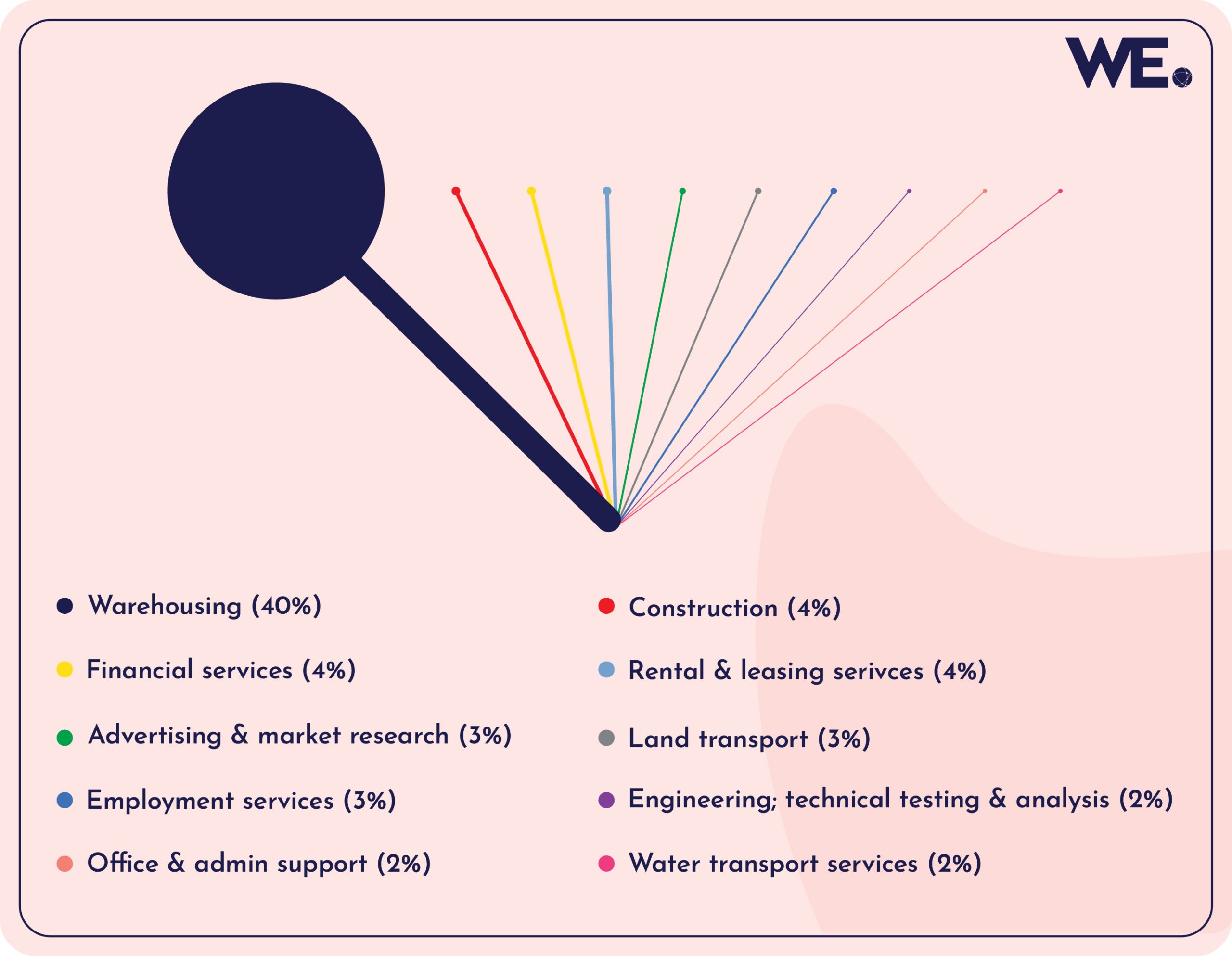
The sectoral analysis of key economic areas comprising the Hampshire economy comprehensively assessed the present and projected state of several sectors and their supply chains including: Aerospace, Digital, Health and Social Care, Advanced Manufacturing, Marine and Maritime (supply chain of the sector presented in the graph drawing on UK Input Output analytical tables) and Science and Technology. Sector reports and infographics accompanied the strategy and its action plan.
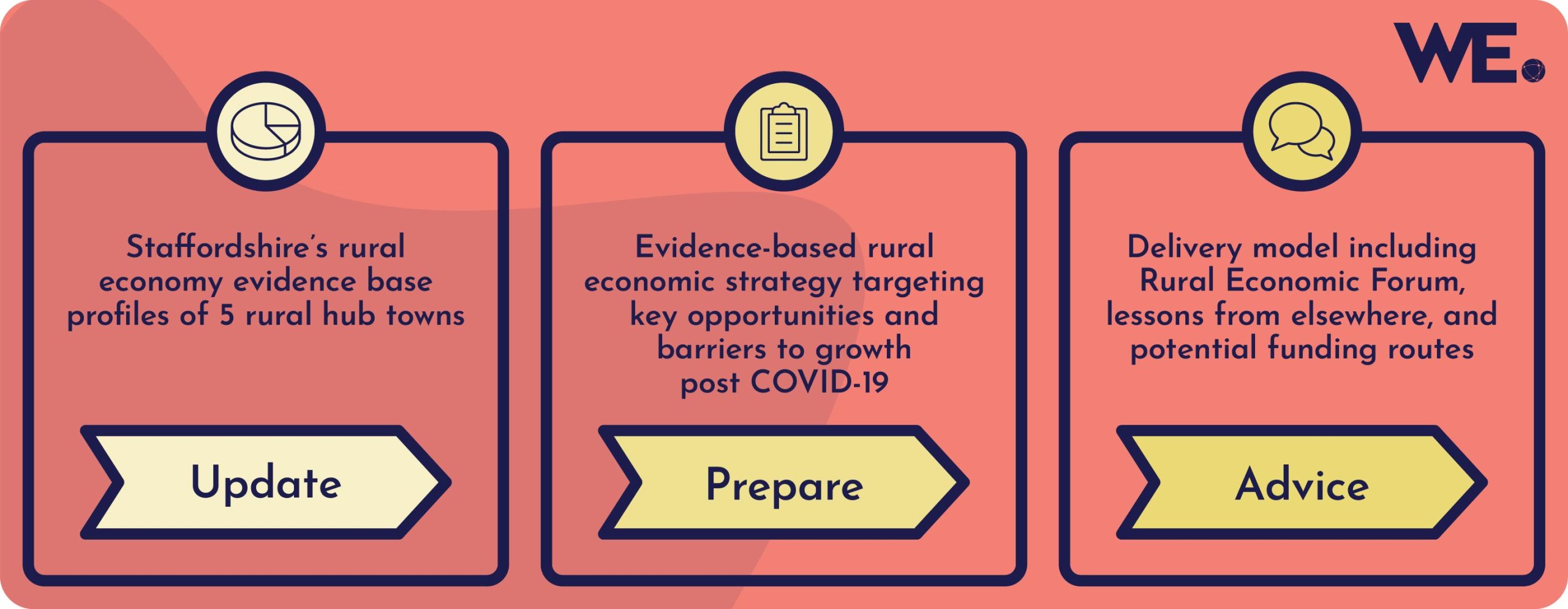
Staffordshire Rural Economy Strategy
WECD produced a similar piece of work to inform the development of a Staffordshire rural economy strategy.
Workforce and Skills Development
WECD have an excellent knowledge of the workforce and skills development policies and contexts (including in England, Scotland and Wales and a range of sectors). Most recent work includes:
- Evaluation of the Employment Engagement and Essential Workforce Skills Programme for the Greater Manchester Combined Authority (the evaluation is led by Little Lion Research and WECD are delivering 45% of the contract).
- Review of the UK Property Profession (Cabinet Office)
- Survey and analysis of Data Science Skills (UKRI Medical Research Council)
- Process Evaluation of the Adult Education Budget (AEB) (GLA)
Business Support
We have undertaken several studies examining business transformation and growth support for SMEs and have a thorough appreciation of the changing and evolving environment in the provision of business support. We have excellent knowledge of economic development and an in-depth understanding of public policy at national and local levels and the organisational and location needs of businesses in different sectors, and factors affecting investors. This knowledge is supported by theoretical and practical understanding of the interface of innovation eco-systems and (local/regional) economic development (including levelling up).
Our capabilities combine theoretical and practical knowledge across many sectors of the economy including life sciences, health care, advanced manufacturing, energy, finance and business services, digital and technologies, and different contexts (in terms of innovation, technologies, technology readiness levels and commercialisation, types of businesses and markets, regulatory, spatial, trade and internationalisation).
We regularly review Company House, national databases and commercial databases (e.g. Moody’s/FAME and Orbis and Beauhurst) to inform assessments and evaluation of changes in business KPIs including productivity, jobs, changes in organisational behaviour and investments.
Examples of our work include:
- Independent assessment of the effectiveness of the services delivered by the West Yorkshire Combined Authority (WYCA) Export for Success and Inspire to Innovate launched under the brand of West Yorkshire Business Boost (WYBB) to help West Yorkshire SMEs to trade more and trade better, and delivered by Exemplas Ltd. The reviews were built around the OECD Development Assistance Committee (DAC) criteria.
- The evaluation and summative assessment of London Business Hub’s ‘Hub &Spoke’ programme, partly funded through the London Mayor’s £112 million Strategic Investment Fund to offer free support and programmes to London-based SMEs. The programme was delivered by Newable Ltd and Bayes Business School (formerly CASS).
- Economic and social impacts of SETsquared Partnership’s (Universities of Bath, Bristol, Exeter, Southampton, Surrey and Cardiff) business and mentoring support – based on achievements and estimates of returns of a similar investment in the future i.e. the next 10 years and those arising from scaling up (in 2014, 2018 and 2022) and assessing activities related to mentoring, adoption of new processes and development of new products, leverage of public and private funds and investments.
- Process and impact evaluation of the £44 million Local Growth Deal-funded Business Growth Programme (BGP) for the Leeds City Region and West Yorkshire Combined Authority.
- Our team also produced evaluations of the work of numerous Growth Hubs including in Hampshire (EM3), the Marches, Birmingham and Solihull, Coventry and Warwickshire and Lincolnshire.
See also internationalisation support.
Office and employment land needs assessment
Black Country Local Authorities (as previous for intro) and reports here:
JLR
Social research
Orbit Homes commissioned WECD to undertake a scoping study of potential opportunities to improve and extend their provision of social housing. Orbit Group – of which Orbit Homes is a subsidiary – is among the foremost housing groups in the UK with a portfolio of over 45,000 affordable and social rent homes largely in the Midlands, East, and South East of England. With these units Orbit Housing services more than 100,000 customers. Additionally, Orbit has delivered an average of 1,700 new units per year with plans to build 16,000 over ten years post-2020.
Secondary and primary research (including discussions and a survey with local authorities in England) indicated an acute need for greater social housing provision across local authorities. Two thirds of those surveyed also stated they were considering projects with housing associations including land acquisition and regeneration projects. Issues highlighted in interviews included:
- The lack of provision of single occupancy and accessible units
- Rurality and the consequential lack of close amenities to social housing
- Affordable housing at 80% of market rates is still often too high
The research also showed that the most successful providers of social housing have close reciprocal relationships with tenants, local authorities and other stakeholders.
Orbit and mental health.